

4
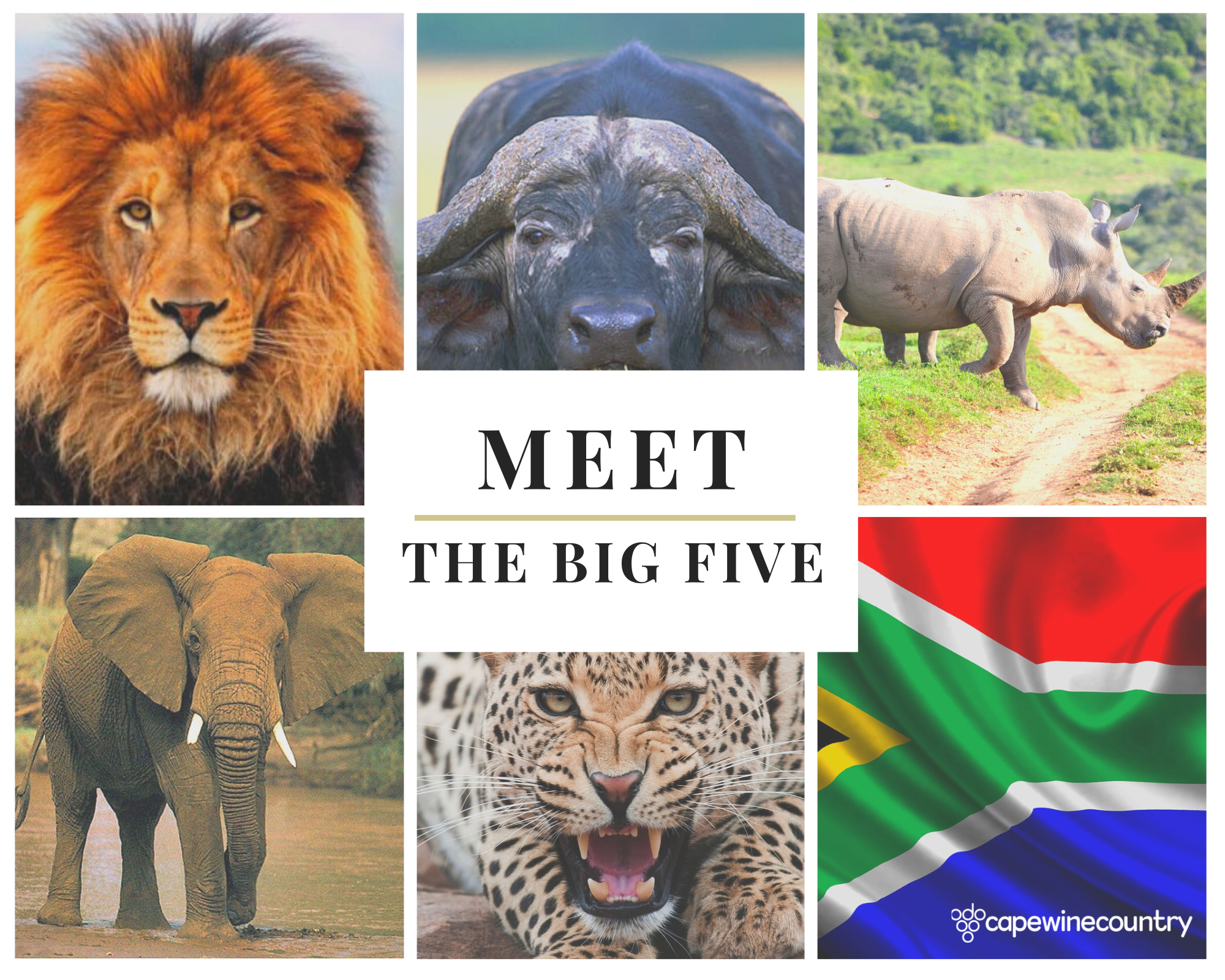
Few wildlife experiences on Earth compare to spotting the Big Five animals of Africa in their natural habitat. These legendary species — lion, elephant, rhinoceros, leopard, and buffalo — represent the most iconic wildlife of the African continent and are the highlight of nearly every safari adventure.
Originally, the term “Big Five” was used by early hunters to describe the five animals considered the most dangerous to hunt on foot. Today, the meaning has evolved. The Big Five now symbolize Africa’s most celebrated wildlife species and the ultimate safari checklist.
South Africa is one of the best places in the world to see all five, thanks to its incredible national parks, protected reserves, and world-leading conservation programs.
In this guide, we’ll explore each of these remarkable animals and what makes them so fascinating.
African Elephant
Loxodonta africana


4
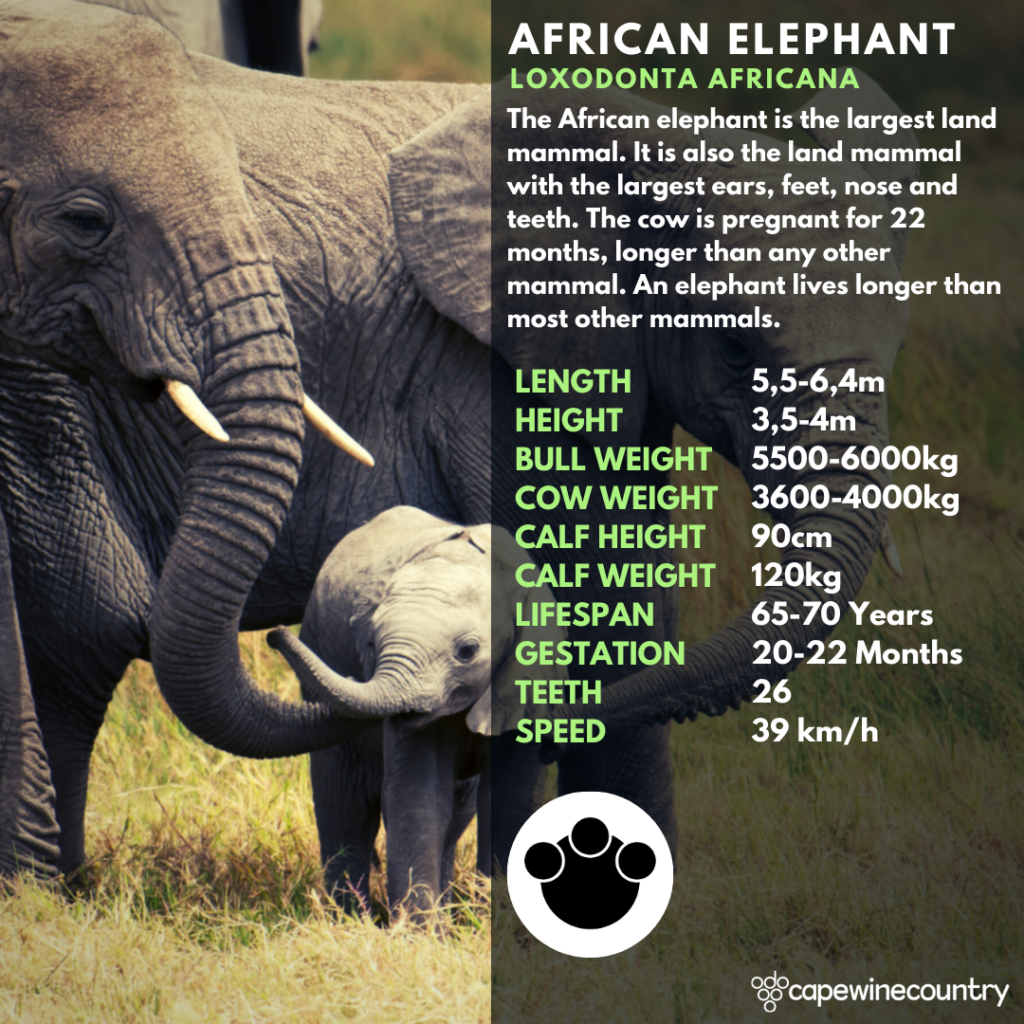
The African elephant is the largest land animal on Earth and one of the most intelligent creatures in the animal kingdom.
Elephants are highly social animals that live in tight-knit family herds led by a matriarch. These herds often include mothers, daughters, sisters, and calves who work together to protect and raise the young.
Their trunks contain more than 40,000 muscles, allowing them to perform incredibly delicate tasks such as picking up a single blade of grass or drinking water.
Elephants also have remarkable emotional intelligence. Studies have shown they can recognize themselves in mirrors, mourn lost family members, and communicate over long distances using low-frequency sounds.
Quick facts
- Length: 5.5 – 6.4 m
- Height: 3.5 – 4 m
- Weight: up to 6,000 kg
- Lifespan: 65 – 70 years
- Speed: up to 39 km/h
Where to see them in South Africa
- Addo Elephant National Park
- Kruger National Park
- Pilanesberg National Park
White Rhinoceros
Ceratotherium simum


4
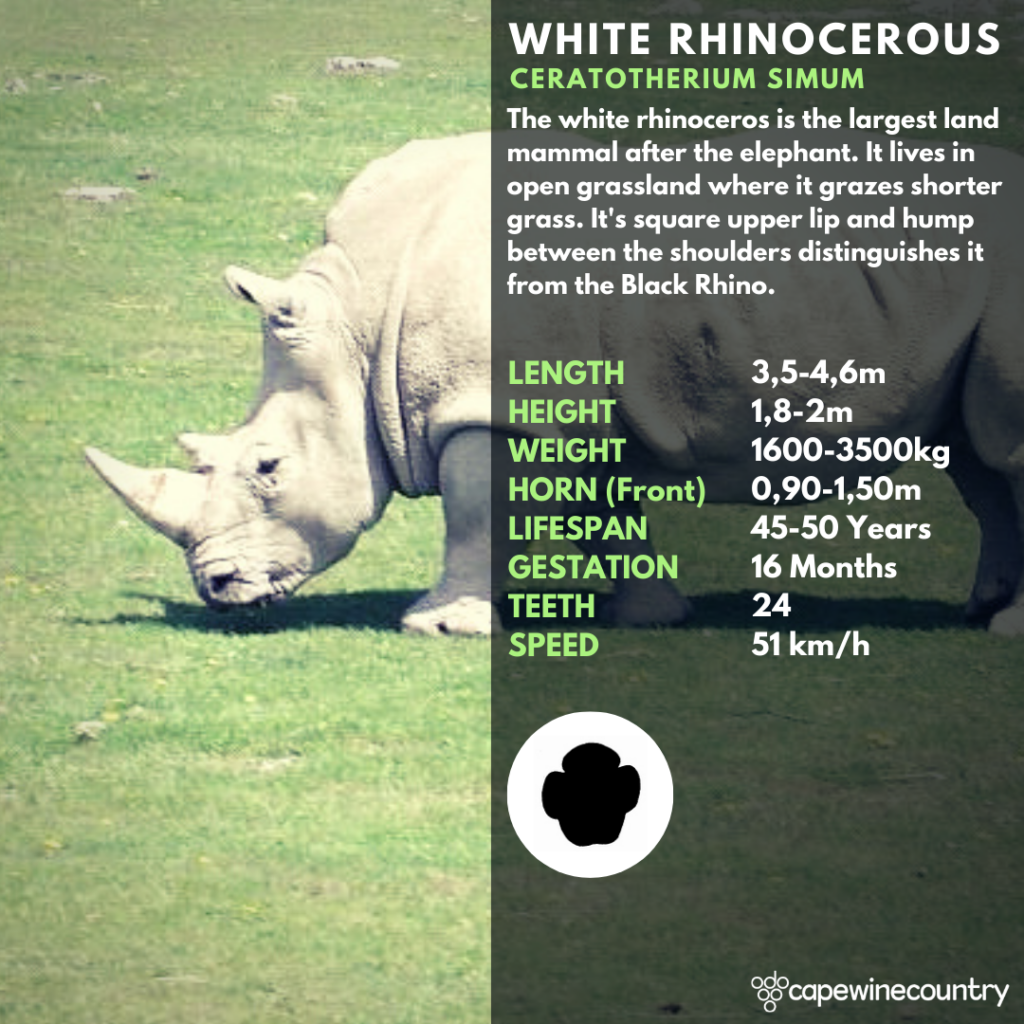
The white rhinoceros is the second-largest land mammal on Earth and a powerful symbol of Africa’s conservation story.
Despite their size and strength, white rhinos are mostly peaceful grazers. Their wide, square-shaped mouths are perfectly adapted for feeding on grass across the open savannah.
Interestingly, the name “white rhino” is actually believed to come from the Afrikaans word “wyd,” meaning wide, referring to the animal’s broad lip.
Sadly, rhinos remain one of the most heavily poached animals in the world due to the illegal trade in rhino horn. Conservation programs across South Africa have made enormous efforts to protect and rebuild rhino populations.
Quick facts
- Length: 3.5 – 4.6 m
- Height: 1.8 – 2 m
- Weight: 1,600 – 3,500 kg
- Lifespan: 45 – 50 years
- Speed: up to 51 km/h
Black Rhinoceros
Diceros bicornis


4
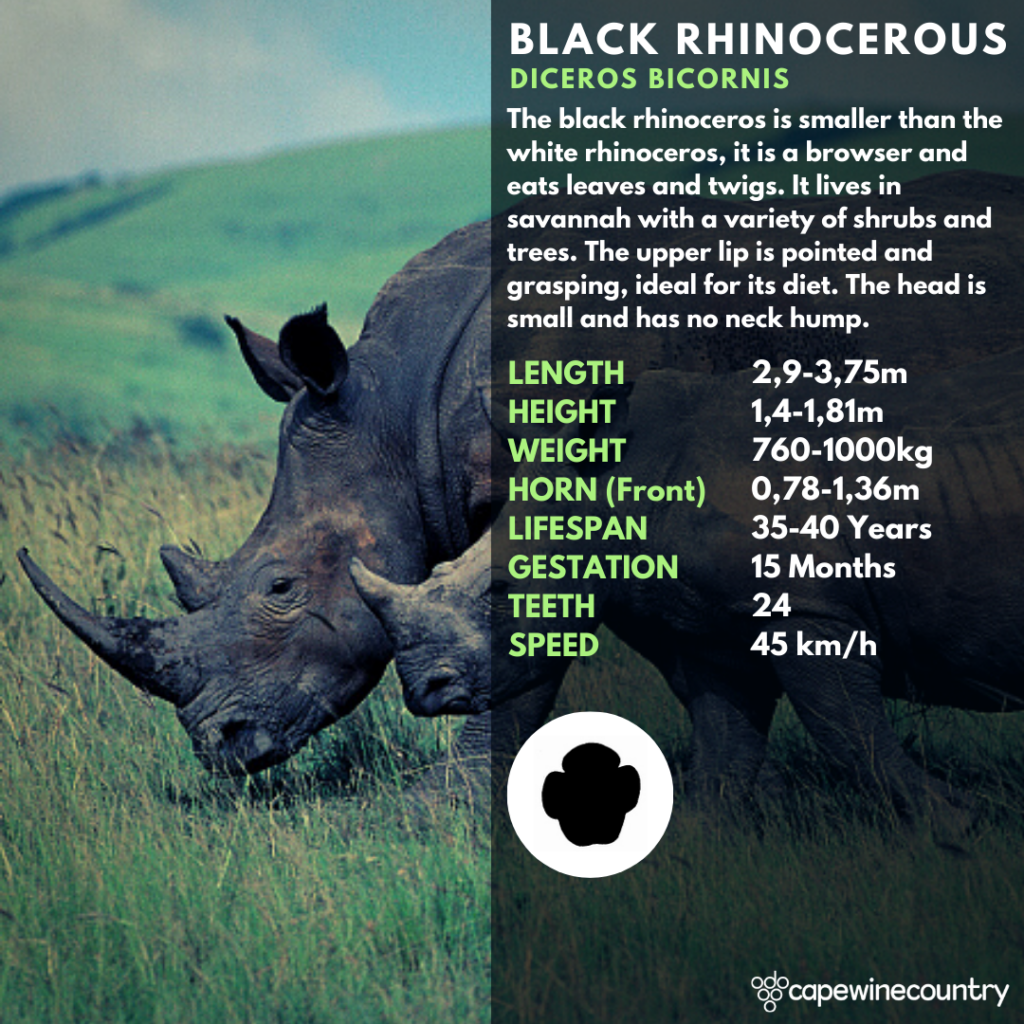
The black rhinoceros is smaller, rarer, and more elusive than the white rhino.
Unlike the white rhino, which grazes on grass, the black rhino is a browser. Its distinctive pointed lip allows it to grasp leaves, twigs, and branches from bushes and trees.
Black rhinos are more solitary and tend to inhabit dense bush environments, making sightings particularly exciting for safari visitors.
Today, black rhinos are classified as critically endangered, but strong conservation programs in South Africa have helped stabilize some populations.
Quick facts
- Length: 2.9 – 3.75 m
- Height: 1.4 – 1.8 m
- Weight: 760 – 1,000 kg
- Lifespan: 35 – 40 years
- Speed: up to 45 km/h
Cape Buffalo
Syncerus caffer


4
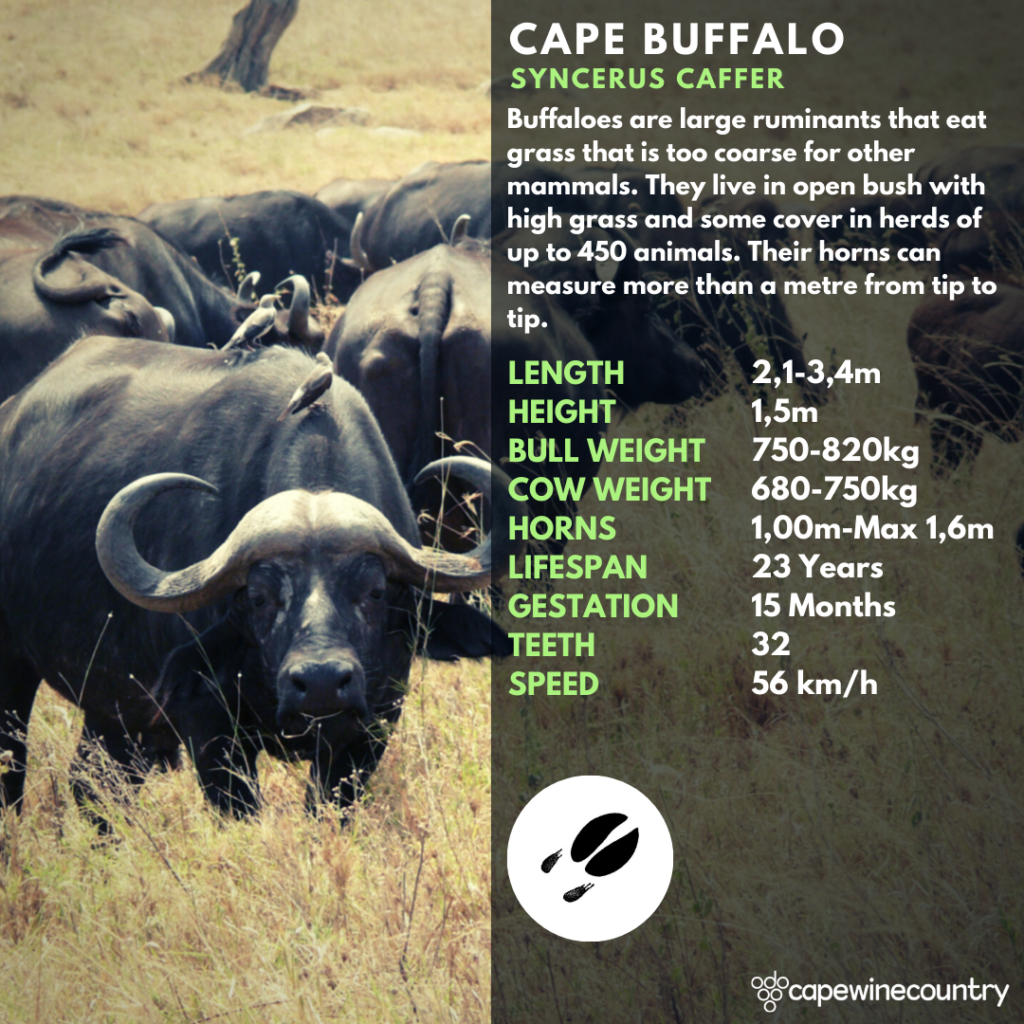
The Cape buffalo is often considered the most dangerous member of the Big Five due to its unpredictable temperament.
These powerful animals travel in large herds that may include hundreds of individuals, providing protection against predators such as lions.
Buffalo are extremely strong and have a distinctive horn structure called a boss, where the horns meet across the forehead forming a solid shield.
They play an important role in the ecosystem by grazing large areas of grassland and supporting the natural balance of predators and herbivores.
Quick facts
- Length: 2.1 – 3.4 m
- Height: around 1.5 m
- Weight: up to 820 kg
- Lifespan: about 23 years
- Speed: up to 56 km/h
Lion
Panthera leo


4
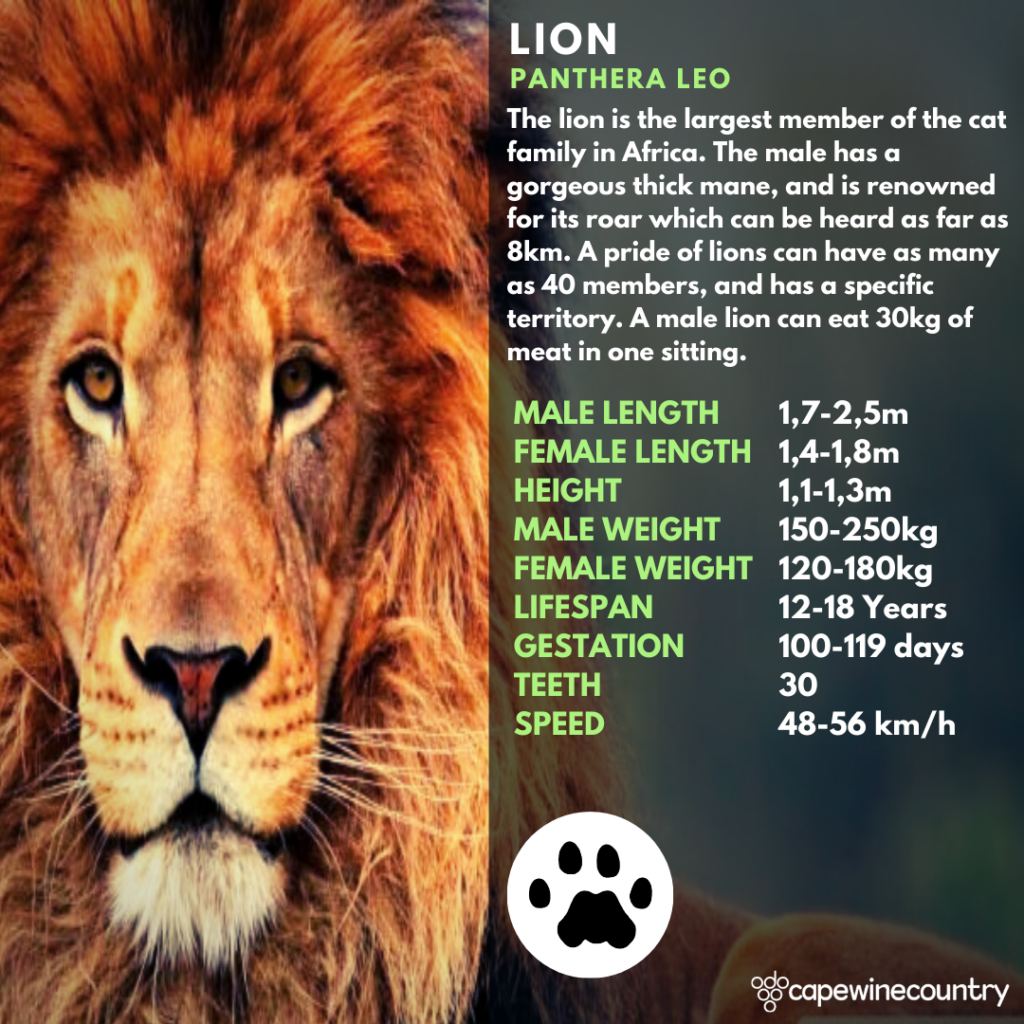
The lion is Africa’s most iconic predator and often called the King of the Jungle.
Lions are unique among big cats because they live in social family groups known as prides. A pride typically consists of related females, their cubs, and a small coalition of males.
Female lions do most of the hunting, working together to bring down prey such as zebra, wildebeest, and buffalo.
The male lion’s roar is legendary — it can be heard from up to 8 kilometers away, announcing territory and warning rival males.
Quick facts
- Length: up to 2.5 m
- Height: 1.1 – 1.3 m
- Weight: up to 250 kg
- Lifespan: 12 – 18 years
- Speed: up to 56 km/h
Leopard
Panthera pardus


4
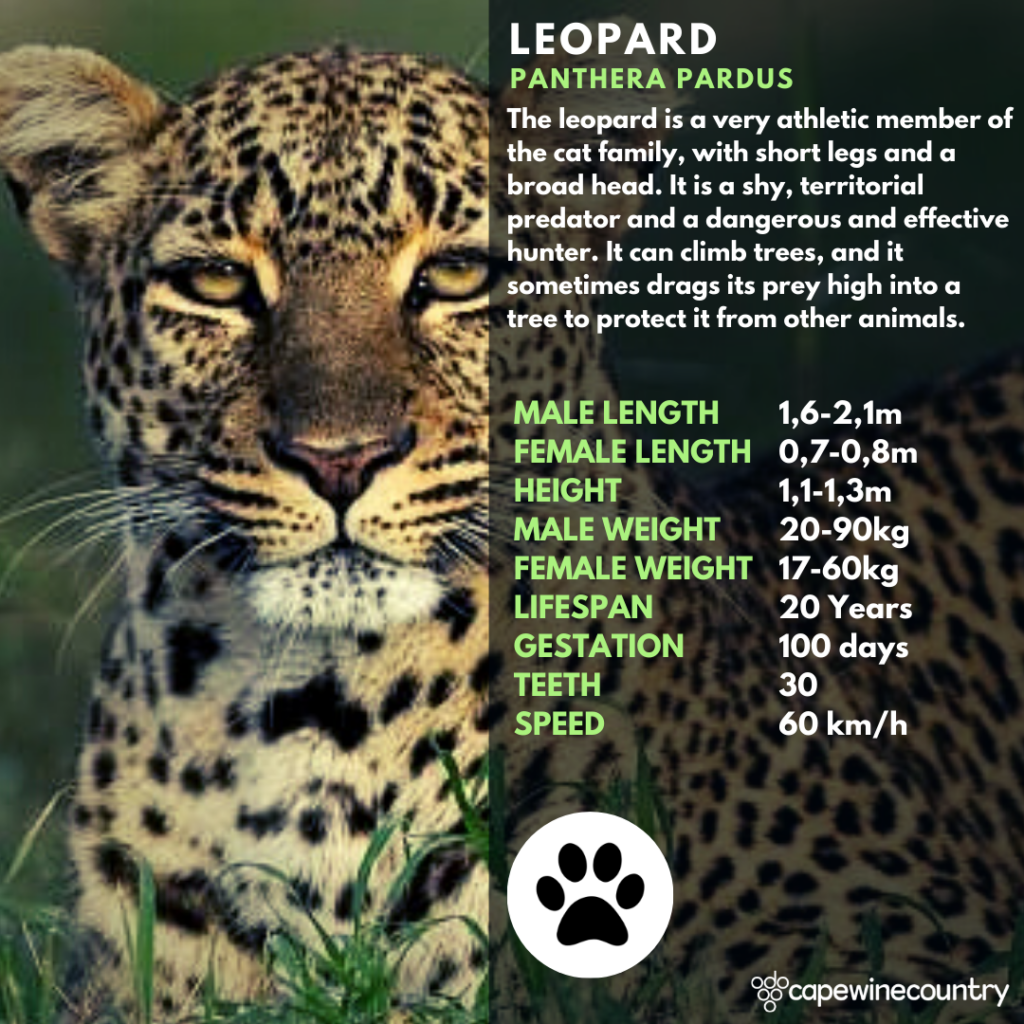
The leopard is the most elusive and mysterious member of the Big Five.
Leopards are solitary hunters known for their stealth, strength, and agility. Their spotted coats provide excellent camouflage, allowing them to disappear into trees and tall grass.
They are also famous for dragging prey into trees to keep it safe from scavengers such as hyenas and lions.
Because of their shy nature, spotting a leopard is considered a special highlight on any safari.
Quick facts
- Length: 1.6 – 2.1 m
- Height: 1.1 – 1.3 m
- Weight: up to 90 kg
- Lifespan: around 20 years
- Speed: up to 60 km/h
Best Places to See the Big Five in South Africa
South Africa offers some of the most accessible and well-managed wildlife reserves in the world.
Top destinations include:
Kruger National Park
One of Africa’s largest game reserves and home to the full Big Five.
Sabi Sands Game Reserve
Famous for exceptional leopard sightings and luxury safari lodges.
Addo Elephant National Park
One of the best places in Africa to see large elephant herds.
Madikwe Game Reserve
A malaria-free reserve known for high wildlife density.
Pilanesberg National Park
A fantastic safari option located close to Johannesburg.
When Is the Best Time to See the Big Five?
The best safari viewing conditions occur during the dry winter months (May–September).
During this time:
- Vegetation is thinner
- Animals gather around water sources
- Wildlife is easier to spot
Early morning and sunset game drives offer the most active wildlife sightings.
Safari Travel Tips
✔ Bring binoculars
✔ Wear neutral-colored clothing
✔ Stay quiet during game drives
✔ Listen to your guide — they know the bush best
Most importantly, be patient. Wildlife sightings are unpredictable, which is part of the magic of safari.
Why the Big Five Still Capture the World’s Imagination
The Big Five are more than just animals — they represent the wild heart of Africa.
Each species plays a critical role in maintaining the balance of the ecosystem, from elephants shaping landscapes to lions regulating prey populations.
Seeing them in the wild is not only thrilling but also a reminder of the importance of protecting these incredible creatures for future generations.
Explore More Wildlife & Travel Guides on Quicksearch
If you love wildlife, nature, and adventure travel, explore more guides on Quicksearch covering:
- South African safari destinations
- wildlife photography tips
- travel experiences and tours
- outdoor adventure activities
Your next adventure might just begin with a single search.